
International Women’s Day
Celebrating Strength, Equality, and Human Dignity
International Women’s Day is not just a date on the calendar; it is a global reminder of humanity’s responsibility to honor, respect, and uplift women in every sphere of life. Observed every year on 8th March, Women’s Day celebrates the achievements of women while also highlighting the long journey toward equality, dignity, and justice. It is a day rooted in human values—fairness, compassion, respect, and shared progress.
Women’s Day belongs to every woman: the mother who sacrifices silently, the daughter who dreams fearlessly, the worker who balances responsibility and ambition, the leader who breaks barriers, and the survivor who rises despite hardship. It is not only a celebration but also a reflection—a call to build a society where gender does not determine opportunity.
The Origin and Meaning of Women’s Day
The history of International Women’s Day is deeply connected with women’s struggles for equal rights, fair wages, safe working conditions, and political representation. In the early 20th century, women across the world began raising their voices against injustice and discrimination. What started as movements demanding labor rights gradually transformed into a global campaign for gender equality.
International Women’s Day emerged from these efforts as a symbol of unity and courage. Over time, it gained international recognition, and organizations such as UN Women have played a vital role in promoting women’s rights, education, and empowerment worldwide.
Today, Women’s Day stands as a bridge between the past and the future—honoring those who fought before us and encouraging new generations to continue the journey toward equality.
Why International Women’s Day Matters
Women make up nearly half of the world’s population, yet gender inequality remains a reality in many forms. Women’s Day matters because it brings attention to issues that still need urgent action:
Unequal pay for equal work
Limited access to education in some regions
Gender-based violence and discrimination
Underrepresentation in leadership and decision-making
Social and cultural restrictions on women’s freedom
International Women’s Day gives society a chance to pause, reflect, and ask an important human question: Are we treating women with the dignity they deserve simply for being human?
Women’s Contributions to Society
Women are the backbone of families, communities, and nations. Their contributions often go unnoticed, yet they shape the world in powerful ways.
Women in the Family
From nurturing children to caring for elders, women hold families together with emotional strength and patience. Their unpaid labor—household work, caregiving, emotional support—is invaluable and deserves recognition and respect.
Women in Education
Education is one of the strongest tools of empowerment. Educated women raise educated families, break cycles of poverty, and contribute positively to society. When a girl is educated, an entire generation benefits.
Women in the Workplace
Women today are doctors, engineers, teachers, entrepreneurs, artists, soldiers, scientists, and leaders. They contribute talent, creativity, and resilience to every profession. Women’s Day honors these achievements while reminding us that equal opportunities must be ensured everywhere.
Women as Change-Makers
Throughout history, women have led social movements, challenged injustice, and inspired reform. Their courage has shaped laws, values, and human rights across the world.
The Humanism Behind Women’s Day
At its core, International Women’s Day is deeply rooted in humanism—the belief that every human being deserves dignity, freedom, and equality. Women’s empowerment is not about superiority; it is about balance, fairness, and shared humanity.
Humanism teaches us that:
A woman’s worth is not defined by societal roles
Respect is a basic human right, not a reward
Equality strengthens society, not weakens it
When women are respected, societies become healthier, economies grow stronger, and future generations become more compassionate.
Challenges Women Still Face
Despite progress, many women continue to face challenges that limit their potential.
Gender Discrimination
In many parts of the world, women are judged differently than men for the same actions or ambitions. Breaking these stereotypes requires awareness and education.
Violence Against Women
Physical, emotional, and psychological violence remains a serious global issue. Women’s Day is a reminder that safety and respect are non-negotiable human rights.
Economic Inequality
Women often earn less than men and have fewer opportunities for financial independence. Economic empowerment is essential for true equality.
Social Expectations
Women are frequently expected to balance multiple roles without support. Recognizing shared responsibility in families and workplaces is a crucial step toward equality.
The Role of Men in Women’s Empowerment
Women’s Day is not only for women; it is for everyone. Men play an important role as allies, supporters, and advocates. True equality can only be achieved when men and women work together with mutual respect.
Supporting women means:
Listening without judgment
Sharing responsibilities at home and work
Challenging discriminatory behavior
Encouraging women’s education and leadership
Equality is not a competition—it is a partnership.
How International Women’s Day Is Celebrated
Across the world, International Women’s Day is celebrated in diverse ways:
Awareness programs and discussions
Educational seminars and workshops
Honoring inspiring women from different fields
Campaigns promoting gender equality
Personal gestures of appreciation and respect
While celebrations differ, the message remains the same: women deserve equality, safety, and dignity every day—not just on one day.
Women’s Day in the Modern World
In today’s digital and globalized world, Women’s Day has gained even more significance. Social media campaigns, global conversations, and youth participation have expanded its reach. Young women are speaking up, breaking stereotypes, and redefining success on their own terms.
Modern Women’s Day is about:
Confidence without fear
Choice without judgment
Freedom without apology
It celebrates not perfection, but authenticity.
A Vision for the Future
The true success of International Women’s Day will be measured not by slogans or events, but by real change. A future where:
Girls grow up without fear or limitation
Women are paid fairly and treated equally
Leadership reflects diversity and inclusion
Respect becomes a daily habit, not an exception
This future is possible—if society chooses empathy over prejudice and equality over tradition.
Conclusion: More Than a Celebration
International Women’s Day is more than a celebration—it is a reminder of our shared humanity. It calls upon us to recognize women not as symbols, but as individuals with dreams, rights, and voices.
A society that respects women is a society that respects life itself.
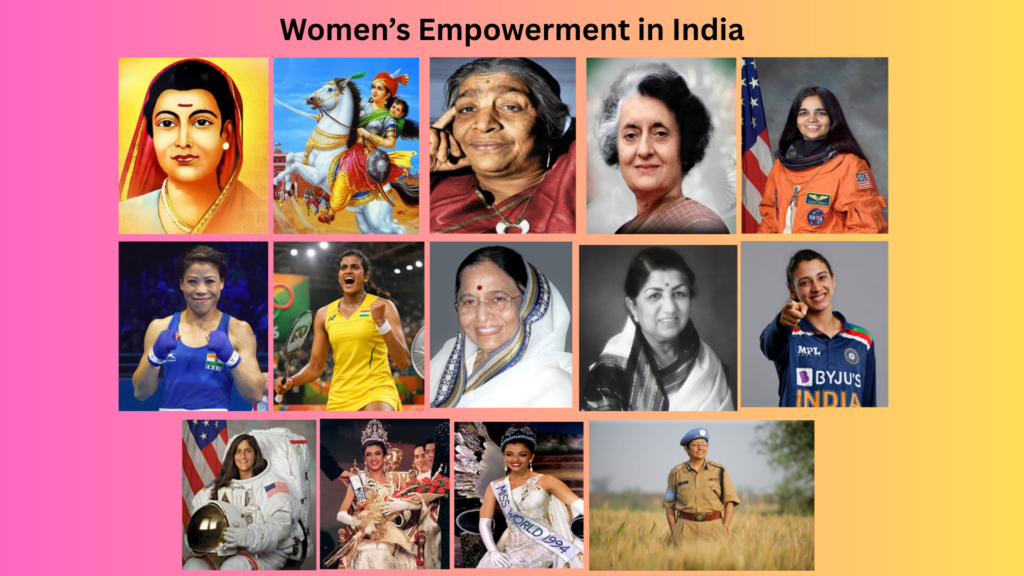
Women’s Empowerment in India: Inspiring Indian Women Who Changed Society
Women’s empowerment in India is a journey of courage, struggle, and transformation. For centuries, Indian women faced social restrictions, limited education, and unequal rights. Yet, despite these barriers, many women rose with strength and determination, becoming symbols of change and hope. Their lives prove that empowerment begins with education, confidence, and equal opportunity.
Today, Indian women are leaders in politics, education, science, sports, social reform, and entrepreneurship. Their stories inspire millions and reflect the true spirit of human dignity and equality.
1. Savitribai Phule – The Mother of Women’s Education
Savitribai Phule was India’s first female teacher and a pioneer of women’s empowerment. At a time when educating girls was considered unacceptable, she courageously opened schools for girls and marginalized communities.
She faced humiliation and resistance but never gave up. Savitribai believed education was the key to freedom and self-respect. Her work laid the foundation for women’s education in India and inspired generations to fight social injustice.
Contribution to Empowerment:
Promoted girls’ education
Fought caste and gender discrimination
Encouraged women’s self-respect
2. Rani Lakshmibai – Symbol of Courage and Freedom
Rani Lakshmi Bai, the Queen of Jhansi, is one of the greatest symbols of courage, patriotism, and women’s empowerment in Indian history. She played a heroic role in the Indian Revolt of 1857 and proved that bravery and leadership have no gender.
Early Life
Birth Name: Manikarnika Tambe
Date of Birth: 19 November 1828
Place of Birth: Varanasi, India
Nickname: Manu
From a young age, she was trained in horse riding, sword fighting, archery, and martial arts, which was rare for girls at that time.
Becoming the Queen of Jhansi
Manikarnika married Maharaja Gangadhar Rao and became the Queen of Jhansi. After the death of her husband, she took responsibility of ruling Jhansi and protecting her adopted son’s rights.
When the British tried to annex Jhansi under the Doctrine of Lapse, Rani Lakshmi Bai strongly opposed it, declaring her determination to defend her kingdom.
Role in the Revolt of 1857
Rani Lakshmi Bai emerged as a fearless leader during the First War of Indian Independence (1857). She personally led her army into battle, dressed as a warrior, riding her horse with her infant son tied to her back.
Her bravery inspired not only soldiers but also ordinary citizens to rise against injustice.
Martyrdom
Rani Lakshmi Bai fought bravely till her last breath and attained martyrdom on 18 June 1858 in Gwalior. She remains immortal in Indian history as a symbol of sacrifice and resistance.
Importance in Women’s Empowerment
Rani Lakshmi Bai shattered stereotypes by proving that women can lead armies, rule kingdoms, and fight for freedom. She continues to inspire women to be strong, fearless, and self-reliant.
Legacy
Her life has been remembered through:
Poems and literature
Statues and memorials
School textbooks
Cultural and patriotic programs
She lives forever in the hearts of Indians as “Jhansi Ki Rani”.
Conclusion
Rani Lakshmi Bai was not only a queen but a revolutionary icon. Her life reminds us that courage, self-respect, and patriotism define true leadership—regardless of gender.
Contribution to Empowerment:
Represented women’s leadership
Inspired confidence and patriotism
Challenged gender stereotypes
3. Sarojini Naidu – Voice of Women and Freedom
Sarojini Naidu was a freedom fighter, poet, and the first woman Governor of an Indian state. Known as the “Nightingale of India,” she strongly advocated women’s rights and participation in politics.
She believed that women must actively shape the nation’s future. Her speeches and leadership encouraged women to step out of social limitations.
Contribution to Empowerment:
Promoted women’s political participation
Encouraged freedom of expression
Inspired confidence through leadership
4. Indira Gandhi – A Powerful Woman Leader
Indira Gandhi was India’s first and only woman Prime Minister. In a male-dominated political world, she proved that women can lead a nation with strength and determination.
Her leadership showed Indian women that ambition and authority are not limited by gender.
Contribution to Empowerment:
Broke gender barriers in politics
Strengthened women’s leadership image
Inspired women to dream big
5. Kalpana Chawla – Inspiring Girls to Dream Beyond Limits
Kalpana Chawla was the first woman of Indian origin to go to space. Coming from a small town in India, she reached the skies through dedication and education.
Her life inspires millions of girls to pursue science, technology, and their dreams—no matter how impossible they seem.
Contribution to Empowerment:
Encouraged girls in science and space research
Proved global success is possible through education
Symbol of courage and aspiration
6. Mary Kom – Strength Beyond Challenges
Mary Kom, a world-class boxer, rose from a humble background to become a global sports icon. Balancing motherhood and a demanding sports career, she shattered stereotypes about women’s physical strength.
Her journey teaches resilience, discipline, and self-belief.
Contribution to Empowerment:
Promoted women in sports
Inspired confidence and resilience
Challenged gender stereotypes
7. P. V. Sindhu – Excellence Through Determination
P. V. Sindhu is one of India’s most successful badminton players, winning Olympic and world championship medals. Her dedication and discipline highlight how empowered women can achieve global excellence.
She represents modern Indian women—confident, focused, and fearless.
Contribution to Empowerment:
Encouraged girls to pursue sports
Promoted discipline and self-confidence
Represented modern women’s success
8. Pratibha Patil – First Woman President of India
Full Name: Pratibha Devisingh Patil
Position: 12th President of India
Term: 25 July 2007 – 25 July 2012
Birth: 19 December 1934, Maharashtra, India
Pratibha Patil made history by becoming the first woman to hold the highest constitutional office in India. Her presidency symbolized progress in women’s empowerment and proved that women can lead the nation with dignity and responsibility.
Before becoming President, she served as:
Governor of Rajasthan
Member of Parliament
Advocate for women’s education and social welfare
Her journey inspired millions of Indian women to believe that no position is beyond their reach.
9. Lata Mangeshkar
Lata Mangeshkar was one of India’s greatest and most respected playback singers. She was lovingly called the “Nightingale of India” for her melodious voice and timeless songs. Her contribution to Indian music is unmatched, and her voice became the soul of Indian cinema for more than seven decades.
Early Life
Full Name: Lata Deenanath Mangeshkar
Date of Birth: 28 September 1929
Place of Birth: Indore, Madhya Pradesh, India
Father: Deenanath Mangeshkar (classical singer and theatre artist)
Lata ji started singing at a very young age to support her family after her father’s early death. Her journey began with struggle, discipline, and determination.
Musical Career
Lata Mangeshkar sang songs in more than 30 Indian languages, including Hindi, Marathi, Bengali, Tamil, Telugu, and Urdu. She recorded over 25,000 songs, making her one of the most recorded artists in history.
Her voice perfectly expressed love, devotion, sorrow, patriotism, and hope. She worked with legendary music directors and became the voice of generations of actresses.
Famous Songs
Some of her most loved songs include:
Aye Mere Watan Ke Logon
Lag Ja Gale
Tere Bina Zindagi Se
Pyar Kiya To Darna Kya
Aaja Re Pardesi
These songs continue to touch hearts even today.
Awards & Honors
Lata Mangeshkar received numerous national and international awards:
Bharat Ratna (India’s highest civilian award)
Padma Bhushan, Padma Vibhushan
Dadasaheb Phalke Award
Multiple National Film Awards
Her achievements brought global recognition to Indian music.
Role in Women’s Empowerment
Lata Mangeshkar was a symbol of strength, simplicity, and self-respect. In a male-dominated music industry, she built her identity through talent and discipline. She proved that women can achieve greatness with dignity and dedication.
Death
Date of Death: 6 February 2022
Age: 92 years
Her passing was a moment of deep national sorrow, but her voice lives on forever.
Legacy
Lata Mangeshkar was not just a singer—she was an emotion of India. Her music united people across generations, languages, and cultures. She remains an eternal inspiration for artists and music lovers.
10. Smriti Mandhana
Smriti Mandhana is one of India’s finest women cricketers and a global icon of women’s empowerment in sports. Known for her elegant batting and fearless attitude, she has inspired millions of young girls to take up cricket and believe in their abilities.
Basic Information
Full Name: Smriti Shriniwas Mandhana
Date of Birth: 18 July 1996
Birthplace: Mumbai, Maharashtra, India
Profession: International Cricketer (Indian Women’s Cricket Team)
Batting Style: Left-handed batter
Early Life & Journey
Smriti Mandhana grew up in a cricket-loving family. Inspired by her brother and supported strongly by her parents, she began playing cricket at a very young age. Her dedication and discipline helped her rise quickly through domestic cricket to the international level.
She made her international debut at the age of just 16, proving that talent combined with hard work has no age limit.
Cricket Career & Achievements
Smriti Mandhana is known for her consistency and confidence at the top order. She has represented India in Tests, One-Day Internationals (ODIs), and Twenty20 Internationals (T20Is).
Major Achievements
Named ICC Women’s Cricketer of the Year
First Indian woman to score a double century in domestic cricket
Regularly ranked among the top women batters in the world
Played in major international leagues like Women’s Big Bash League (WBBL) and The Hundred
Her performances have earned respect not only in India but across the world.
Role in Women’s Empowerment
Smriti Mandhana represents the new generation of Indian women—confident, independent, and fearless. In a country where cricket was once seen as a male-dominated sport, she broke stereotypes and proved that women can excel at the highest level.
She empowers women by:
Encouraging girls to play sports
Promoting equality in opportunities
Being a strong role model for discipline and self-belief
Awards & Recognition
Arjuna Award
ICC Awards for Women’s Cricket
Recognized globally for sportsmanship and performance
Conclusion
Smriti Mandhana is more than a cricketer—she is a symbol of confidence, courage, and change. Her journey teaches us that when girls are given support and equal opportunity, they can shine on the world stage.
11. Sunita Williams
Sunita Williams is a world-famous astronaut of Indian origin who has inspired millions, especially young girls, to believe that dreams have no limits.
Basic Information
Full Name: Sunita Lyn Williams
Date of Birth: 19 September 1965
Birthplace: Euclid, Ohio, USA
Father: Deepak Pandya (from Gujarat, India)
Nationality: American
Profession: Astronaut, former U.S. Navy officer
Career & Achievements
Sunita Williams joined NASA and became one of the most experienced astronauts in the world.
Major Achievements:
Spent 300+ days in space
Completed 7 spacewalks
Former record holder for most spacewalk time by a woman
Served as Commander of the International Space Station
Took part in missions Expedition 14, 15, 32, and 33
Connection with India
Sunita Williams proudly respects her Indian roots. She carried:
The Bhagavad Gita
A Lord Ganesha idol
Indian food items
into space, showing love for Indian culture.
Role in Women’s Empowerment
Sunita Williams is a powerful symbol of women’s empowerment. She proves that:
Girls can succeed in science and space
Education and discipline can break all barriers
Women can lead in the most challenging fields
She motivates young girls to choose STEM careers (Science, Technology, Engineering, Mathematics).
Conclusion
Sunita Williams is not just an astronaut—she is a global inspiration. Her life teaches us that with courage, hard work, and confidence, women can reach beyond the sky.
12. Sushmita Sen – First Miss Universe of India
Basic Information
Full Name: Sushmita Sen
Date of Birth: 19 November 1975
Birthplace: Hyderabad, India
Title Won: Miss Universe 1994
Age at Winning: 18 years
Sushmita Sen created history by becoming the first Indian woman to win the Miss Universe crown in 1994. Her victory brought international recognition to India and opened new doors for Indian women on the global stage.
Journey to Miss Universe
Sushmita Sen first won the Femina Miss India 1994 title. She then represented India at the Miss Universe pageant, held in the Philippines. With her confidence, intelligence, and graceful personality, she impressed judges and audiences worldwide.
Her famous answer during the final round about the essence of being a woman highlighted her maturity, compassion, and human values—qualities that made her stand out.
Life After Miss Universe
After winning Miss Universe, Sushmita Sen became a successful actor, model, and public speaker. She also became known for her independent mindset and strong personality.
Social Contributions
Advocate for women’s empowerment
Promoter of self-confidence and individuality
Adopted two daughters and proudly supported single motherhood, challenging social stereotypes
Role in Women’s Empowerment
Sushmita Sen’s success showed that Indian women could compete and excel at a global level with confidence and dignity. She proved that beauty is not just physical—it also includes intelligence, courage, and kindness.
She inspired:
Young girls to believe in themselves
Women to be independent and fearless
Society to redefine beauty with strength and values
Why Sushmita Sen Is Important in Indian History
First Indian Miss Universe
Global recognition for Indian women
Role model for confidence and independence
Symbol of modern Indian womanhood
Conclusion
Sushmita Sen is not just a beauty queen—she is a trailblazer. Her historic Miss Universe win remains a proud moment for India and a powerful milestone in the journey of women’s empowerment.
13. Aishwarya Rai Bachchan – The Most Famous Miss World of India
Basic Information
Full Name: Aishwarya Rai
Title Won: Miss World 1994
Birth: 1 November 1973, Mangalore, India
Profession: Actress, Model, Global Ambassador
Aishwarya Rai won the Miss World crown in 1994 and instantly became an international sensation. Her grace, intelligence, and elegance brought worldwide attention to India.
Why Aishwarya Rai Is the Most Famous Miss World
She became a global beauty icon
Achieved massive success in Indian and international cinema
Represented India at Cannes Film Festival for many years
Served as a UN goodwill ambassador
Recognized worldwide for beauty, dignity, and talent
Her Miss World victory opened international doors for Indian women in fashion, cinema, and global platforms.
Contribution to Women’s Empowerment
Aishwarya Rai showed that Indian women could be:
Confident on global stages
Successful internationally
Respected for talent and intelligence, not just beauty
She inspired generations of young women to dream beyond borders.
Other Famous Miss World Winners from India
India has produced several remarkable Miss World winners:
Priyanka Chopra Jonas – Global actress, singer, entrepreneur
Manushi Chhillar – Doctor and women’s health advocate
Conclusion
While India has had many Miss World winners, Aishwarya Rai Bachchan remains the most famous and iconic, representing Indian beauty, intelligence, and dignity on the world stage.
14. Kiran Bedi
Kiran Bedi is a strong symbol of women’s empowerment, discipline, and leadership in India. She made history by becoming India’s first woman IPS (Indian Police Service) officer and proved that courage and integrity have no gender.
Basic Information
Full Name: Kiran Bedi
Date of Birth: 9 June 1949
Birthplace: Amritsar, Punjab, India
Profession: IPS Officer (Retired), Social Activist, Politician
Known For: Police reforms and prison reforms
Historic Achievement
In 1972, Kiran Bedi became the first woman to join the Indian Police Service. At a time when policing was considered a male-only profession, she broke stereotypes and opened doors for women in uniform.
She became popularly known as “Crane Bedi” for her fearless action against illegal parking near the Prime Minister’s residence in Delhi.
Major Contributions
Introduced prison reforms at Tihar Jail
Focused on education, meditation, and skill development for prisoners
Promoted discipline with compassion
Worked actively for youth empowerment and women’s rights
Role in Women’s Empowerment
Kiran Bedi showed Indian women that:
Leadership belongs to those with courage
Women can succeed in the toughest professions
Honesty and discipline create real change
She became a role model for women aiming for careers in police, administration, and public service.
Awards & Recognition
Ramon Magsaysay Award (for government service)
National and international honors for public service
Conclusion
Kiran Bedi is not just a police officer—she is a trailblazer. Her life story inspires women to stand strong, serve society, and lead with integrity.