
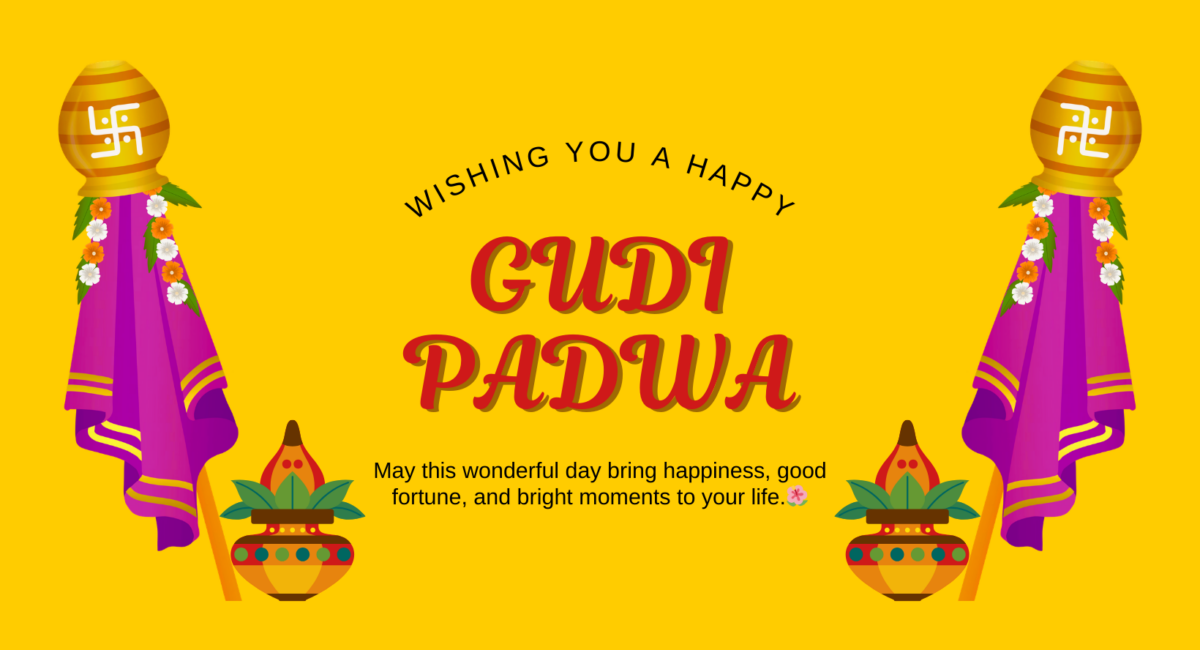
Happy Gudi Padwa
Gudi Padwa – The Story, Significance, and Celebration of the Marathi New Year
Gudi Padwa is one of the most important and joyful festivals celebrated in the Indian state of Maharashtra and among Marathi communities around the world. This festival marks the beginning of the traditional Hindu New Year according to the lunisolar calendar. It usually falls in the month of March or April and is celebrated on the first day of the Hindu month of Chaitra.
Gudi Padwa symbolizes new beginnings, prosperity, happiness, and victory of good over evil. People celebrate the day with colorful rangoli, traditional food, new clothes, and by raising a sacred flag called the Gudi outside their homes. The festival is deeply connected with Indian history, mythology, and culture, making it a meaningful and spiritual occasion for families.
Historical and Mythological Background of Gudi Padwa
The festival of Gudi Padwa is associated with several important legends and historical events. These stories explain why the festival is celebrated with such happiness and respect.
1. Creation of the Universe
According to Hindu mythology, it is believed that Lord Brahma, the creator of the universe, started the creation of the world on the day of Gudi Padwa. Because of this belief, the day is considered the first day of time and the beginning of a new year in the Hindu calendar.
The festival therefore symbolizes the creation of life, new opportunities, and the start of a fresh cycle. People pray on this day for happiness, prosperity, and success throughout the year.
2. Victory of Lord Rama
Another popular legend connected to Gudi Padwa is the victory of Lord Rama over the demon king Ravana.
After defeating Ravana in the great epic Ramayana, Lord Rama returned to his kingdom Ayodhya. The people of Ayodhya welcomed him with great celebration and raised victory flags. The Gudi that people raise today is believed to represent this flag of victory and happiness.
Thus, Gudi Padwa is seen as a symbol of good triumphing over evil and truth winning over injustice.
3. Victory of Chhatrapati Shivaji Maharaj
Another historical significance of Gudi Padwa is related to the great Maratha ruler Chhatrapati Shivaji Maharaj.
It is believed that after winning battles and establishing the Maratha Empire, people celebrated his victories by raising the Gudi as a symbol of pride, courage, and success. Because Shivaji Maharaj is deeply respected in Maharashtra, this connection adds even more importance to the festival.
Meaning of the Word “Gudi Padwa”
The name “Gudi Padwa” has a special meaning.
Gudi – A decorated flag or symbol of victory.
Padwa – Derived from the Sanskrit word “Pratipada,” which means the first day of the lunar fortnight.
Therefore, Gudi Padwa literally means “the day of raising the victory flag on the first day of the new year.”
The Symbol of the Gudi
The Gudi is the most important part of the festival. It is placed outside homes, usually on the right side of the entrance or from a window or terrace.
A traditional Gudi is made using:
A long bamboo stick
A bright silk cloth (often yellow, green, or saffron)
Neem leaves and mango leaves
A garland of flowers
Sugar crystals called gaathi
An inverted silver or copper pot (kalash) placed at the top
The Gudi represents victory, prosperity, and protection from negative energy. People believe that the Gudi invites good luck and happiness into the home.
Preparations for Gudi Padwa
Preparations for Gudi Padwa begin several days before the festival. Families clean and decorate their homes to welcome the new year.
House Cleaning and Decoration
Just like many other Indian festivals, people clean their homes thoroughly. This symbolizes removing negativity and welcoming positive energy.
Women and children decorate the entrance with beautiful rangoli designs made using colored powder and flowers. Fresh mango leaves are also tied to doors as a symbol of good fortune.
Wearing New Clothes
On the morning of Gudi Padwa, people wake up early and take a traditional oil bath. They wear new clothes, often traditional outfits.
Women may wear Nauvari sarees, while men wear kurta-pajama or dhoti. Children also dress in colorful traditional clothes.
Traditional Food of Gudi Padwa
Food plays a very important role in the celebration of Gudi Padwa. Special dishes are prepared at home and shared with family and neighbors.
Some popular dishes include:
Puran Poli – A sweet flatbread filled with jaggery and lentils
Shrikhand – A sweet yogurt dessert flavored with saffron and cardamom
Poori and Batata Bhaji
Kheer or sweet rice
One unique tradition is eating a mixture of neem leaves and jaggery. The bitter taste of neem and the sweetness of jaggery symbolize the different experiences of life – both happiness and challenges.
This ritual teaches people to accept life with balance and positivity.
Rituals and Traditions of Gudi Padwa
Raising the Gudi
The most important ritual of the festival is raising the Gudi. Early in the morning, families assemble the decorated bamboo stick and place it outside their house.
After placing the Gudi, people offer flowers, incense, and prayers. They believe the Gudi brings success, health, and prosperity for the entire year.
Visiting Temples
Many families visit temples to offer prayers to Lord Vishnu and Lord Brahma. Special prayers and religious ceremonies are held in temples on this day.
Devotees pray for a peaceful and successful year ahead.
Family Gatherings
Gudi Padwa is also a time for family gatherings and social celebrations. Relatives visit each other’s homes, exchange sweets, and share festive meals.
Children often enjoy the festival by helping decorate the Gudi and participating in traditional activities.
Cultural Importance of Gudi Padwa
In Maharashtra, Gudi Padwa is not only a religious festival but also a cultural celebration of Marathi identity and heritage.
Many cultural programs are organized in cities and towns. Traditional music, dance, and processions are held to celebrate the festival.
In some places, people participate in Shobha Yatras (cultural parades) where participants wear traditional attire, play drums, and carry Gudis through the streets.
Gudi Padwa in Other Parts of India
Although Gudi Padwa is mainly celebrated in Maharashtra, similar festivals marking the Hindu New Year are celebrated in different parts of India.
For example:
In Andhra Pradesh and Telangana it is celebrated as Ugadi.
In Karnataka it is also called Yugadi.
In Punjab the new year festival is Baisakhi.
Although the names and customs may vary, the spirit of celebrating a new beginning is the same.
Modern Celebration of Gudi Padwa
Today, Gudi Padwa is celebrated not only in India but also by Marathi communities living abroad. Cultural organizations organize community gatherings, cultural shows, and traditional food festivals.
Many people also share greetings and wishes on social media, spreading the joy of the festival digitally.
Despite modern lifestyles, the traditional values of family unity, cultural pride, and spiritual reflection remain strong during Gudi Padwa.
Moral and Spiritual Message of Gudi Padwa
Gudi Padwa carries a powerful message for everyone. The festival teaches that every year is a new opportunity to start fresh, leave behind past problems, and move forward with hope and determination.
The raised Gudi reminds people to stay strong, courageous, and positive, just like a victory flag flying proudly in the sky.
The mixture of neem and jaggery also teaches an important life lesson — life includes both bitter and sweet experiences, and we should accept them with patience and wisdom.
Conclusion
Gudi Padwa is a beautiful and meaningful festival that celebrates new beginnings, victory, and cultural traditions. It marks the start of the Hindu New Year and brings families together in happiness and devotion.
From the raising of the Gudi to the preparation of traditional food and the sharing of joyful moments with loved ones, every part of the festival reflects hope, gratitude, and positivity.
The stories connected with the festival—from the creation of the universe by Lord Brahma to the victory of Lord Rama and the pride of Chhatrapati Shivaji Maharaj—make Gudi Padwa a powerful reminder of India’s rich history and spiritual heritage.
As people raise the Gudi each year, they welcome a new beginning filled with happiness, success, and prosperity, keeping alive a tradition that has been celebrated for generations.
FAQs
- What is Gudi Padwa?
Gudi Padwa is the New Year festival celebrated in Maharashtra and marks the beginning of the Hindu lunar year. When is Gudi Padwa celebrated?
Gudi Padwa is celebrated on the first day of the Chaitra month, usually in March or April.Why is a Gudi raised on this day?
The Gudi is raised as a symbol of victory, happiness, and prosperity.Which god is believed to have created the universe on this day?
According to belief, Lord Brahma created the universe on this day.What special food is prepared during Gudi Padwa?
People prepare traditional dishes like Puran Poli and eat neem leaves with jaggery.