
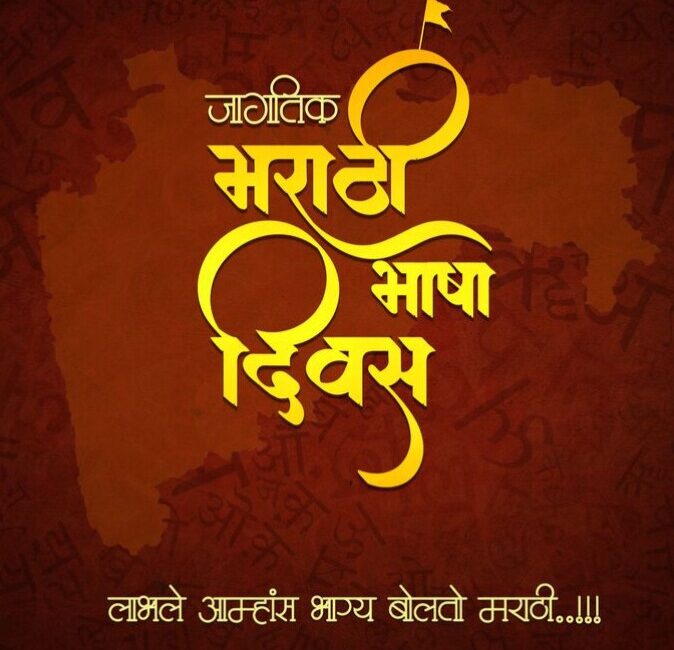
Marathi Language Day
Marathi Language Day: Celebrating Identity, Culture, and the Soul of Maharashtra
Language is not merely a tool of communication; it is the living soul of a people. It carries memories, emotions, values, traditions, and collective wisdom from one generation to the next. In India, a country of remarkable linguistic diversity, every language holds a unique cultural universe within it. Among these rich languages, Marathi stands tall as one of the oldest, most expressive, and culturally vibrant languages. Marathi Language Day, also known as Marathi Bhasha Gaurav Din, is celebrated every year on 27 February to honor this language and to remember the legacy of one of its greatest literary figures, Kavi Kusumagraj.
Marathi Language Day is not just a symbolic celebration. It is a reminder of identity, self-respect, social responsibility, and cultural continuity. It invites people to reflect on the importance of preserving linguistic heritage in a rapidly globalizing world.
The Origin and Significance of Marathi Language Day
Marathi Language Day was officially observed by the Maharashtra Government to commemorate the birth anniversary of Kavi Kusumagraj, born on 27 February 1912. He was a towering personality in Marathi literature whose writings shaped modern Marathi thought and inspired social consciousness.
The day was established with a clear purpose:
To promote the use of Marathi in daily life
To encourage literary creativity
To preserve linguistic purity while embracing change
To instill pride in the Marathi identity, especially among younger generations
In an age where English and global languages dominate education, technology, and employment, Marathi Language Day acts as a cultural anchor. It reminds society that progress should not come at the cost of cultural roots.
Marathi: A Language with Ancient Roots and Living Power
Marathi belongs to the Indo-Aryan language family and evolved from Maharashtri Prakrit and later Apabhramsha. Its history spans more than a thousand years, making it one of the oldest continuously used languages in India.
Marathi has been:
The language of saints and reformers
The language of kings and warriors
The language of poets, playwrights, and philosophers
The language of common people, farmers, workers, and artists
From ancient inscriptions to medieval devotional poetry and modern literature, Marathi has continuously evolved while retaining its emotional depth and expressive power.
Contribution of Saint Literature to Marathi Language
One of the most defining chapters in the history of Marathi is the Bhakti Movement. Saints like Dnyaneshwar, Namdev, Eknath, Tukaram, and Janabai used Marathi to spread spiritual knowledge among ordinary people.
Instead of Sanskrit, which was limited to scholars, these saints chose Marathi so that spiritual wisdom could reach everyone. Their abhangas and ovi poems transformed Marathi into a language of devotion, equality, and social reform.
This spiritual foundation gave Marathi a moral and philosophical depth that continues to influence its literature even today.
Kavi Kusumagraj: The Voice of Modern Marathi
Kavi Kusumagraj, whose real name was Vishnu Vaman Shirwadkar, played a revolutionary role in modern Marathi literature. His writings were not limited to poetry; they reflected social justice, human dignity, freedom, and resistance against oppression.
His literary works addressed:
The struggle of common people
The pain of inequality
The dream of a just society
The emotional strength of the Marathi spirit
By dedicating Marathi Language Day to him, society honors not just a poet, but a philosophy that sees language as a tool for social awakening.
Marathi Language as a Cultural Identity
Language and identity are deeply connected. For Marathi people, the language is more than words—it is an emotional bond.
Marathi:
Shapes family relationships
Defines cultural rituals and festivals
Preserves folk traditions and oral histories
Expresses humor, emotion, and resilience
Whether spoken in villages, cities, or even outside India by the Marathi diaspora, the language carries a sense of belonging and pride.
Marathi Language Day encourages people to speak Marathi confidently, without feeling inferior to global languages. It promotes bilingual or multilingual growth without cultural loss.
Marathi in Education and Knowledge Systems
Education plays a crucial role in the survival of any language. Marathi Language Day highlights the importance of:
Learning in the mother tongue
Producing quality educational content in Marathi
Encouraging research, science, and technology writing in Marathi
Studies have shown that children learn concepts more effectively when taught in their first language. Marathi, with its rich vocabulary and clarity, is fully capable of expressing modern scientific and technical ideas.
The challenge today is not the ability of Marathi, but society’s willingness to invest in it.
Marathi Literature: A Mirror of Society
Marathi literature has always reflected social reality. From classical poetry to modern novels, short stories, and plays, it has captured:
Rural and urban life
Women’s experiences
Caste and class struggles
Political movements
Emotional and psychological depth
Modern Marathi writers have expanded the boundaries of the language by addressing contemporary themes while maintaining literary quality.
Marathi Language Day celebrates not only past achievements but also the living, evolving nature of Marathi literature.
Marathi in Theatre, Cinema, and Media
Marathi theatre is one of the strongest pillars of Indian performing arts. From traditional folk forms like Tamasha to experimental modern plays, Marathi theatre has influenced national drama movements.
Marathi cinema has gained recognition for:
Strong storytelling
Realistic characters
Social relevance
Artistic integrity
Print media, radio, television, and digital platforms in Marathi continue to shape public opinion and cultural awareness. Marathi Language Day encourages the ethical and creative use of the language across all media.
Challenges Facing the Marathi Language Today
Despite its rich heritage, Marathi faces several modern challenges:
Declining use in urban households
Preference for English-medium education
Reduced reading habits
Limited digital content compared to global languages
Marathi Language Day is not just a celebration—it is a call to action. It urges individuals, institutions, and policymakers to protect and promote the language.
Role of Youth in Preserving Marathi
The future of Marathi lies in the hands of the younger generation. Marathi Language Day inspires youth to:
Read Marathi books and poetry
Write blogs, stories, and content in Marathi
Use Marathi creatively on social media
Respect the language without resisting global exposure
Language survives when it adapts. When youth bring Marathi into modern spaces like technology, design, music, and digital art, the language remains alive and relevant.
Marathi Language Day in a Global Context
In a globalized world, multilingualism is a strength. Marathi Language Day promotes the idea that embracing English or other languages does not require abandoning one’s mother tongue.
A person rooted in their language:
Thinks more deeply
Expresses more authentically
Understands culture more clearly
Marathi, spoken by millions across the world, continues to connect communities beyond borders.
Conclusion: Language as Living Heritage
Marathi Language Day is not just about remembering history—it is about shaping the future. It reminds society that language is not inherited automatically; it must be actively lived, spoken, written, and respected.
Marathi is a language of emotion, resistance, creativity, and wisdom. It has survived centuries of change because people believed in it. Honoring Marathi means honoring the voices of saints, poets, farmers, workers, women, and dreamers who shaped its journey.
As long as Marathi is spoken with pride, written with care, and passed on with love, its legacy will remain alive—not as a museum artifact, but as a living, breathing expression of human experience.