
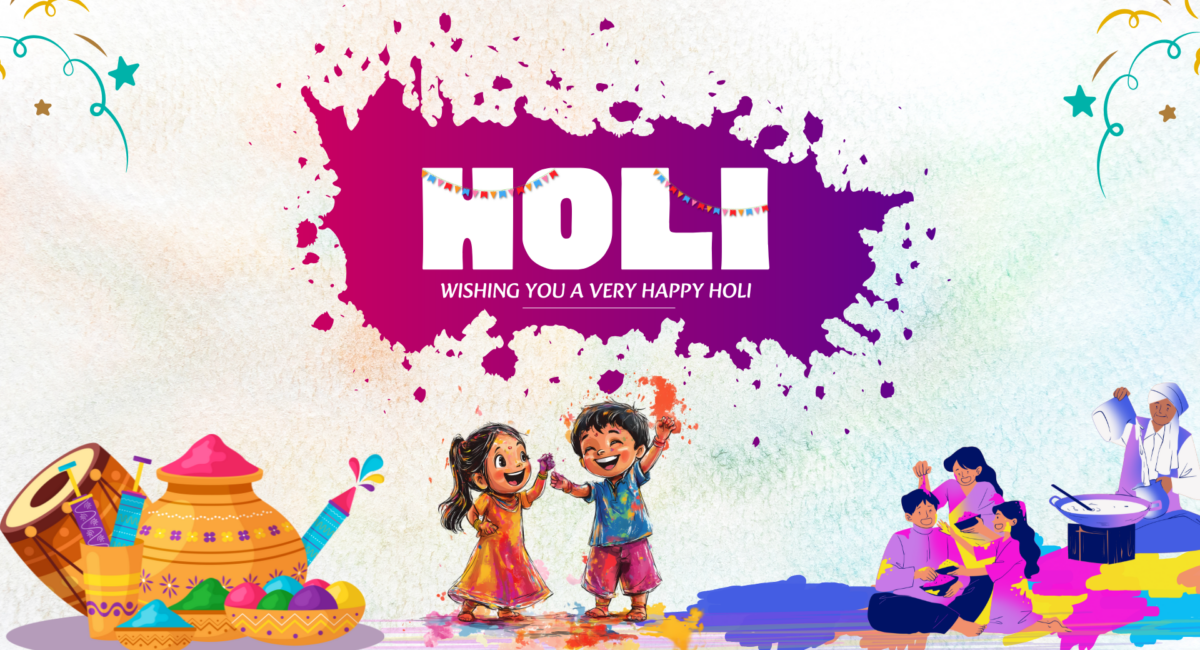
Why Do We Celebrate Holi?
The Festival of Colors, Courage, and Human Unity
Holi is one of the most joyful and meaningful festivals celebrated in India and many parts of the world. Known as the Festival of Colors, Holi is much more than throwing colored powder and water on each other. It is a festival deeply rooted in human emotions, moral values, seasonal change, and social harmony. Holi reminds people that love is stronger than hatred, truth is more powerful than evil, and joy is meant to be shared without discrimination.
Holi is usually celebrated in the month of March, marking the arrival of spring after a long winter. This seasonal transition has both physical and emotional significance for human life. Nature blooms again, fields turn green, flowers blossom, and people feel renewed energy. Holi reflects this natural rebirth by encouraging people to let go of negativity and start fresh.
The Human Meaning Behind Holi
At its core, Holi celebrates human equality. On this day, there is no difference between rich and poor, young and old, man and woman. When colors cover everyone’s face, social status disappears. A king and a commoner look the same under layers of color. This powerful idea teaches humanity that we are all equal at heart.
Holi also gives people emotional freedom. Many individuals carry stress, anger, jealousy, or sadness throughout the year. Holi offers a socially accepted moment to laugh freely, forgive past mistakes, and reconnect with others. People hug, smile, and wish each other happiness, creating emotional healing that modern life often lacks.
The Legend of Holika and Prahlad: Victory of Good Over Evil
One of the most important reasons Holi is celebrated comes from an ancient story symbolizing courage and faith. This story is centered on Prahlad, Holika, and the tyrant king Hiranyakashipu.
Hiranyakashipu was a powerful ruler who believed he was greater than any god. He demanded that everyone worship him. However, his own son Prahlad remained devoted to goodness and truth. Prahlad believed that no human should place themselves above morality and compassion.
Angered by his son’s refusal, Hiranyakashipu tried many ways to punish and kill Prahlad, but each attempt failed because Prahlad stood firm in his faith. Finally, the king ordered his sister Holika—who had a magical blessing that protected her from fire—to sit in a burning fire with Prahlad on her lap.
But the result was unexpected. Holika’s blessing failed because it was misused for evil, and she was burned to ashes, while Prahlad survived unharmed. This event symbolizes a universal human truth: power without morality cannot survive, and innocence protected by truth always wins.
The ritual of Holika Dahan, where people light a bonfire on the night before Holi, represents the burning away of evil thoughts, arrogance, and injustice from human life.
Holi and the Celebration of Love
Another important reason Holi is celebrated is its connection to love, playfulness, and emotional expression. In many parts of India, Holi is associated with the divine love of Krishna and Radha.
According to popular belief, Krishna playfully applied color on Radha and the other villagers, turning Holi into a joyful celebration of affection and togetherness. This story humanizes divinity by showing that love does not need rules or boundaries—it needs honesty, joy, and connection.
Through this tradition, Holi teaches humans that love should be expressed freely, not hidden behind fear or social pressure. It encourages emotional openness, laughter, and shared happiness.
Holi as a Festival of Forgiveness
One of the most beautiful human values behind Holi is forgiveness. On Holi, people forget past arguments, misunderstandings, and emotional wounds. Enemies become friends again, and broken relationships often find healing.
The simple phrase “Bura na mano, Holi hai” (Don’t mind it, it’s Holi) carries deep psychological meaning. It reminds people that life is short and holding grudges only causes suffering. Holi gives society a chance to reset emotional relationships and move forward with kindness.
Social Harmony and Community Bonding
Holi plays a major role in strengthening social bonds. Families gather, neighbors meet, and communities celebrate together. People visit each other’s homes, share sweets, and exchange good wishes. This shared celebration builds trust and emotional closeness among people.
In villages and cities alike, Holi breaks loneliness. Even those who live isolated lives are drawn into the collective joy. Music, dance, laughter, and shared food create a sense of belonging that modern society often lacks.
Agricultural and Seasonal Significance
Holi also has strong agricultural importance. It is celebrated at the end of the winter season and near the time of the Rabi crop harvest. Farmers see Holi as a festival of hope and gratitude, thanking nature for its generosity.
Spring represents fertility, growth, and renewal. The colors of Holi symbolize flowers blooming and life returning to the earth. Humans celebrate Holi because it connects them emotionally to nature and reminds them that they are part of the natural cycle.
Holi in Modern Times
Today, Holi is celebrated not only in India but across the world. People of different religions, cultures, and nationalities participate in Holi festivals, appreciating its message of joy and unity. In a world divided by conflicts, Holi sends a powerful human message: differences can coexist with happiness.
Modern Holi celebrations have also evolved to include eco-friendly colors, water conservation awareness, and respect for personal boundaries. This shows how ancient traditions can adapt while preserving their human essence.
The Psychological Importance of Holi
From a mental health perspective, Holi is deeply therapeutic. Laughter, physical movement, music, and social interaction release stress and improve emotional well-being. Playing with colors allows adults to reconnect with their inner child, something often lost in daily responsibilities.
Holi reminds humans that joy is not a luxury—it is a necessity for emotional balance.
Conclusion: Why Holi Truly Matters
Holi is celebrated not just because of tradition, but because human beings need joy, connection, forgiveness, and hope. It teaches timeless values:
- Evil will always destroy itself
- Love has the power to unite
- Forgiveness heals hearts
- Equality creates harmony
In a fast-paced, divided world, Holi stands as a colorful reminder that humanity’s greatest strength lies in togetherness. When people throw colors on each other, they are not just celebrating a festival—they are celebrating life itself.
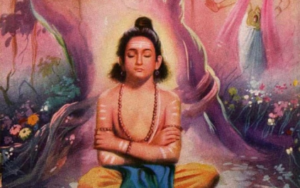
Prahlad:-
Prahlad is a revered devotee in Hindu mythology, celebrated for his unwavering faith in Lord Vishnu despite the persecution of his father, the demon king Hiranyakashipu. His story, central to the Bhagavata Purana and Vishnu Purana, exemplifies the triumph of devotion and virtue over arrogance and tyranny.
- Key facts
Parents: Hiranyakashipu (father), Kayadhu (mother) - Deity worshipped: Lord Vishnu
- Avatar associated: Narasimha (man-lion incarnation of Vishnu)
- Festival linked: Holi (Holika Dahan)
- Texts: Bhagavata Purana, Vishnu Purana, other Puranas
Mythological background
Prahlad was born into the asura (demon) lineage but grew up devoted to Vishnu, influenced by sage Narada even before birth. His father, Hiranyakashipu, had received a boon granting near-immortality and demanded to be worshipped as a god. Enraged by Prahlad’s defiance, the king subjected his son to lethal trials—poison, elephants, serpents, and fire—yet divine protection saved the boy each time.
Narasimha’s appearance and the fall of Hiranyakashipu
When Hiranyakashipu challenged Prahlad’s claim that Vishnu was omnipresent, Vishnu emerged from a palace pillar as Narasimha, a being neither man nor beast. At twilight, on a threshold (neither inside nor outside), Narasimha slew the tyrant with his claws—thus bypassing the conditions of his boon. The act symbolized the restoration of cosmic order.
Symbolism and legacy
Prahlad’s story is a cornerstone of Vaishnava theology, embodying steadfast bhakti (devotion) and moral courage. His miraculous survival during the fire ordeal is commemorated as Holika Dahan, observed on the eve of Holi to honor the victory of faith and righteousness. Prahlad later ruled benevolently and was regarded as one of the twelve mahajanas—great exemplars of devotion in Hindu thought.
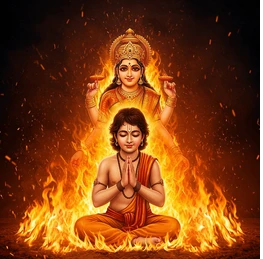
Holika
Holika is a demoness in Hindu mythology, best known for her role in the legend of Prahlad and Hiranyakashipu. Her story explains the origins of the ritual Holika Dahan, celebrated on the eve of the festival of Holi to mark the victory of devotion and virtue over arrogance and evil.
- Key facts
Relation: Sister of Hiranyakashipu; aunt of Prahlad - Power: Immunity to fire by a divine boon
- Mythic source: Appears in Bhagavata Purana and folk retellings
- Symbolism: Triumph of good over evil
- Festival link: Honored during Holika Dahan before Holi
Mythological background
Holika was the sister of the asura king Hiranyakashipu, who received a boon from Lord Brahma that made him nearly invincible. When his son Prahlad became an ardent devotee of Lord Vishnu, the enraged king sought to destroy him. Holika, who possessed a cloak that made her immune to fire, agreed to help. She sat on a pyre with Prahlad on her lap, expecting to survive while he burned.
Divine intervention and death
Through Prahlad’s unwavering devotion, divine forces reversed the outcome. The protective cloak flew from Holika and wrapped around Prahlad instead, leaving him unharmed while Holika was consumed by the flames. Her fiery death symbolizes the defeat of evil intentions and the protection of true faith.
Cultural significance
The event is commemorated annually as Holika Dahan, when communities across India and Nepal burn bonfires representing Holika’s pyre. The ritual purges negativity and ushers in spring’s renewal. The next day’s vibrant festival of Holi celebrates joy, forgiveness, and unity—values emerging from Holika’s cautionary tale.
Symbolism and legacy
Holika’s legend embodies moral lessons central to Hindu philosophy: arrogance leads to downfall, while faith and righteousness prevail. The fire that destroyed her is interpreted as purification—burning away ego and malice to make way for spiritual growth and communal harmony.
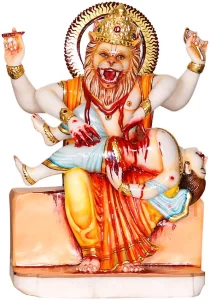
Hiranyakashipu
Hiranyakashipu is a legendary asura (demon) king from Hindu mythology, known for his immense power, arrogance, and defiance of the god Vishnu. His tale, found in the Bhagavata Purana and other Puranas, illustrates the triumph of divine justice through Vishnu’s Narasimha incarnation and his son Prahlada’s unwavering devotion.
Key facts
- Parents: Sage Kashyapa and Diti
- Spouse: Kayadhu
- Children: Prahlada, Anuhlada, Hlada, Samhlada, Shibi
- Brother: Hiranyaksha (slain by Vishnu’s Varaha avatar)
- Killed by: Narasimha (half-man, half-lion form of Vishnu)
Origins and lineage
Born to Kashyapa and Diti, Hiranyakashipu was one of the Daityas—powerful beings descended from divine-seer and titan lineages. Along with his brother Hiranyaksha, he is considered an earthly incarnation of Jaya and Vijaya, gatekeepers of Vishnu’s abode Vaikuntha, who were cursed to be born as enemies of the god. His name, meaning “clothed in gold,” reflects his attachment to wealth and worldly pleasure.
Boon and rise to power
To avenge his brother’s death at Vishnu’s hands, Hiranyakashipu performed severe austerities to propitiate Brahma and won a complex boon rendering him nearly invincible: he could not die by any being, weapon, or condition of time or place. Empowered by this, he conquered the heavens and declared himself supreme ruler, demanding that all—including the gods—worship him.
Conflict with Prahlada and Narasimha’s intervention
Hiranyakashipu’s own son, Prahlada, became an ardent devotee of Vishnu, provoking his father’s wrath. Despite numerous attempts to kill the boy, divine protection preserved him. When challenged about Vishnu’s omnipresence, Prahlada declared the god existed even within a palace pillar. Enraged, Hiranyakashipu struck the pillar, from which Vishnu emerged as Narasimha—half-man, half-lion—and killed him at twilight, on a threshold, with claws instead of weapons, thus fulfilling every loophole of the boon.
Symbolism and legacy
Hiranyakashipu represents the destructive power of ego and the futility of seeking immortality through pride. His downfall embodies the principle that cosmic order (dharma) prevails over tyranny. The story’s memory endures in the annual Holika Dahan festival, commemorating the protection of Prahlada and the burning of evil. His legend remains central in devotional, artistic, and philosophical traditions across South Asia.